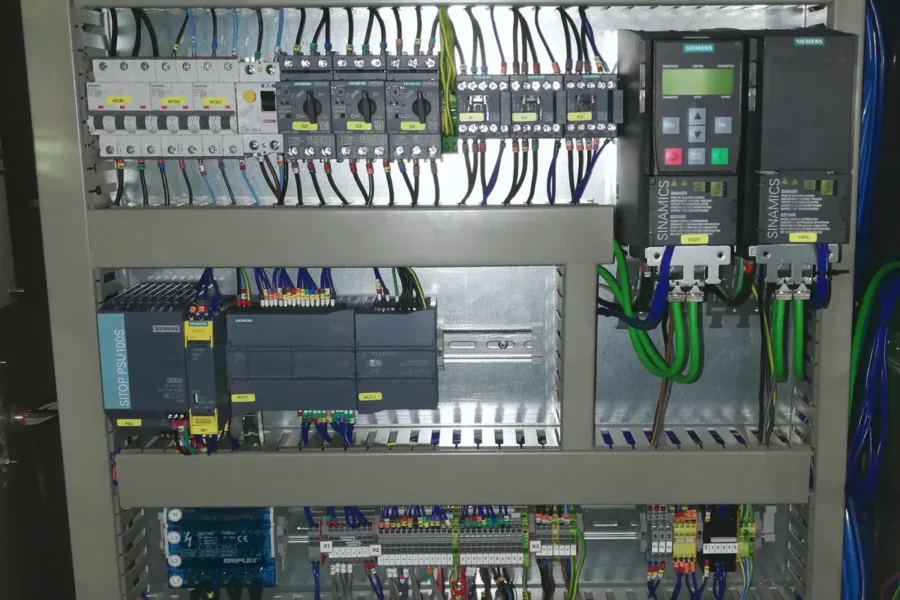
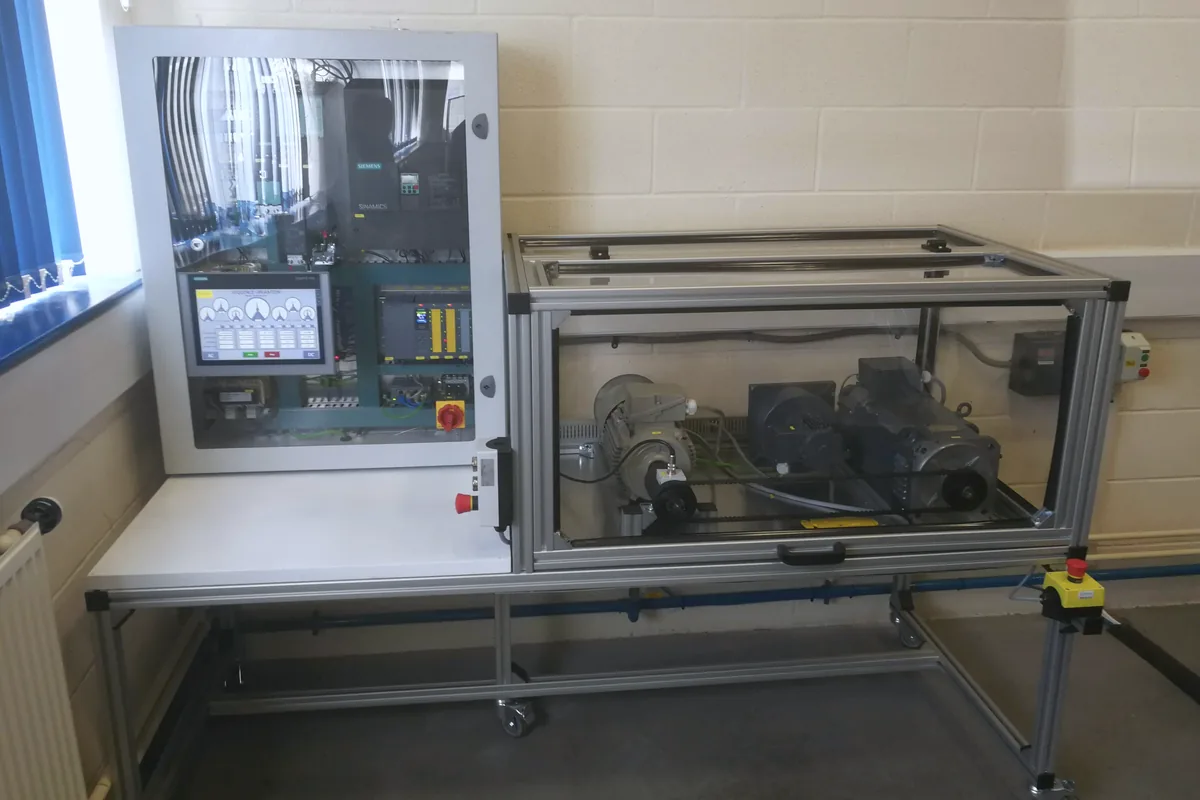
FAT and SAT help demonstrate that a control system meets its agreed requirements. A control panel can look complete while important operating questions remain unanswered. Factory acceptance testing (FAT) checks agreed requirements before delivery. Site acceptance testing (SAT) checks the installed system in its actual environment. A good plan uses both stages to expose problems at a point when they can still be managed.
Neither label guarantees a particular test scope. Define the tests, evidence and acceptance conditions in the project agreement. Commissioning, electrical verification and safety validation also have their own requirements; a general FAT checklist does not replace them.
Agree the basis for FAT and SAT
Start with the approved functional specification, drawings, I/O schedule, interface definitions and relevant safety documentation. Give each test a requirement reference. Record the software version, panel revision and equipment used, so a pass applies to a known configuration.
Agree which functions can be demonstrated with simulated signals and which need real equipment or product. Also identify attendees, witness points and the decisions each person can make. It is difficult to resolve an operating disagreement if the person authorised to accept it is absent.
Use FAT to test behaviour, including failure
FAT is a useful opportunity to work through sequences with production and maintenance staff. Test normal operation, then deliberately exercise defined abnormal conditions in a controlled test environment. Do not improvise hazardous faults on live plant.
- Check panel construction, identification and documentation against the agreed scope.
- Verify I/O mapping and signal scaling using the agreed simulation arrangements.
- Run operating modes, sequence transitions and product or recipe selections.
- Check operator permissions, input limits and the information shown when an action is refused.
- Test planned responses to missing signals, communication loss and interrupted sequences.
- Confirm the backup package and version record match the tested software.
Where a supplier device is simulated, label that limitation in the record. A simulated “ready” signal proves how the PLC responds to that signal; it does not prove the other manufacturer’s machine will produce it at the right time.
Use SAT to prove installation and real interfaces
Site testing needs to cover what could not be established in the workshop: actual field wiring, rotation or movement where safely permitted, sensor locations, network connections and interaction with neighbouring equipment. Confirm that field device names match the drawings and HMI messages.
Plan product trials around representative operating conditions. A short run with one product may not establish behaviour across all formats, rates or recipes. Define what is required for acceptance and what remains a later performance trial.
| Test area | Typical factory evidence | Typical site evidence |
|---|---|---|
| Machine interface | Logic responds to agreed simulated states | Real equipment exchanges the correct signals |
| Alarms | Message, priority and response checked | Device identification and real fault indication checked |
| Production data | Calculations and export format checked | Counts reconciled against observed production |
| Recovery | Defined sequence interruption tested | Approved recovery demonstrated with site conditions |
Record results that another engineer can follow
For both FAT and SAT, a test sheet should state the starting conditions, action, expected result, actual result, evidence reference and outcome. “Works OK” is difficult to audit. For a failed test, record the observed behaviour, responsible person, corrective action and retest requirement.
Separate defects that prevent acceptance from agreed minor outstanding items. Assign deadlines and acceptance authority. If a software change is made during testing, assess which earlier tests need repeating; passing the new test alone may miss a regression elsewhere.
Finish with a controlled handover
Before closing the project, reconcile the final software, drawings, settings and test records. Identify any restrictions on operation and make sure training covers the actual delivered version. Safety-related functions need the appropriate validation and competent sign-off, based on the approved safety requirements.
Advanced Automation can plan commissioning and acceptance testing alongside panel build and PLC development. Discuss your project with the equipment list, functional specification and intended site window so the test scope can be agreed early.
Related guides
Sources and further reading
Technical sources checked 28 October 2026. Confirm the requirements and manufacturer documentation applicable to your equipment.